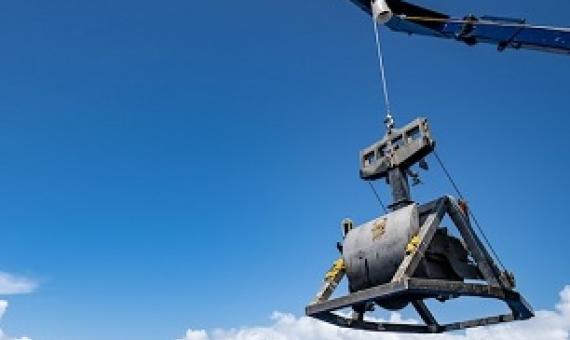
A team of marine biologists and oceanographers from the University of California, the University of British Columbia, the University of Hawaii and the South Atlantic Environmental Research Institute, has found evidence suggesting that fish such as skipjack, yellowfin tuna and bigeye have be
Climate change to drive increasing overlap between Pacific tuna fisheries and emerging deep-sea mining industry
In ocean areas beyond national jurisdiction, various legal regimes and governance structures result in diffused responsibility and create challenges for management. Here we show those challenges are set to expand with climate change driving increasing overlap between eastern Pacific tuna fisheries and the emerging industry of deep-sea mining. Climate models suggest that tuna distributions will shift in the coming decades.
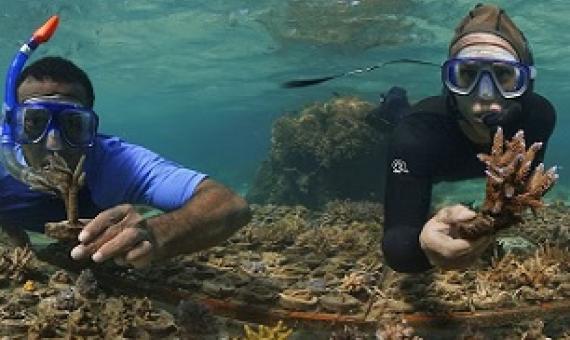
Victor Bonito takes the concept of working from home to new levels. The marine scientist's house overlooks his lab: the beautiful turquoise-blue waters of Fiji's Coral Coast.
A new international study has found that amphibians and reptiles inhabiting the world's nature reserves, or Protected Areas (PAs), will be better protected against climate change than species found outside these areas, but are still likely to be harmed.
Climate change adaptation in the Pacific needs to be examined more carefully.
Marine heatwaves are emerging as a key impact of climate change and pose a particularly significant threat to corals that form the backbone of coral reefs. Researchers have now identified a phenomenon that could help coral reef managers better plan and act for the future.
The effectiveness of global protected areas for climate change mitigation
Forests play a critical role in stabilizing Earth’s climate. Establishing protected areas (PAs) represents one approach to forest conservation, but PAs were rarely created to mitigate climate change. The global impact of PAs on the carbon cycle has not previously been quantified due to a lack of accurate global-scale carbon stock maps. Here we used ~412 million lidar samples from NASA’s GEDI mission to estimate a total PA aboveground carbon (C) stock of 61.43 Gt (+/− 0.31), 26% of all mapped terrestrial woody C.
We have crossed six of the nine boundaries within which human life on Earth will still be possible for future generations. That is not good news. Can the tide still be turned? The planetary boundaries were discussed on May 9 as part of the Leiden University Green Office's Sustainability Day.
Resilient Ecosystems, Resilient Communities - Situational Analysis of the Moata'a Community and Mangrove Environment - Analysis report
Mangrove ecosystems are under pressure due to anthropogenic stressors and sea level rise. The resilience of mangroves will depend on the rate of accretion of sediments compared to the rate of sea level rise and their capability to colonise higher elevation areas or buffer zones. This will also be affected by the measures to protect the existing mangroves against anthropogenic pressures. Call Number: [EL]Physical Description: 91 p.
The Guardian is an experiential environmental educational initiative that was co-developed by Conservation International and partners, including Samoa's Ministry of Education, Science, and Culture (M.E.S.C.) help improve the environmental literacy of communities, targeting Year 7 primary school s