The science of marine reserves

Research shows that marine reserves are one tool that can help to prevent, slow, or reverse negative changes in the ocean. Marine reserves are places in the ocean that are completely and permanently protected from uses that remove animals and plants or alter their habitats. Increasingly, the public, governmental agencies, commercial groups, and scientists are discussing the idea of establishing more marine reserves to complement existing ocean management. The purpose of this report is to provide a summary of the latest scientific information about marine reserves.
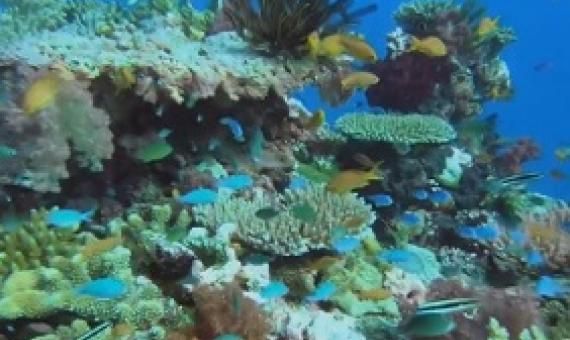

Status of coral reefs in the Fiji islands : 2006 reef monitoring report, knowledge, management and beneficial use of coral reef ecosystems

In 2000, the Fiji Islands was at the northern edge of a large pool of unusually warm water, and suffered extensive hard coral death due to coral bleaching. A paper composed of a collection of studies from across the Fiji islands, linking this coral
death to elevated sea temperatures at the time, was published (Cummings et al 2000). The difficulty of gathering data from very different sources, and which had been recorded using many different methods, established the need for standardised

Fiji's great sea reef : the first marine biodiversity survey of Cakaulevu and associated coastal habitats

This report presents the results of a twelve day survey expedition (5 to 16 December, 2004) and represents the first ever systematic effort to document the marine biodiversity of the Great Sea Reef (GSR), locally known as Cakaulevu, to the north of Vanua Levu in the Fiji Archipelago.

The results of a reconnaissance survey into the potential and development of wave energy along the coral coast Fiji

The Coral Coast, Fiji, was one of the areas included in a South Pacific Marine Resources Energy Programme commissioned, by the Marine Resource Department of the University of the South Pacific. This present survey formed part of an overall exercise embracing similar work in Tonga and West Samoa, and the period spent in Fiji covered March 22nd to April 11th.
Available online
Call Number: [EL]
Physical Description: 52 p.

Review and analysis of Fiji's Conservation sector : final report

Biodiversity conservation - that is, the conservation of plants and animals that make up the species richness of a country - is widely recognised as an issue of importance for the South Pacific as it is relevant to family livelihoods, culture and economic development as well as to the unique biological story that these islands possess. The biodiversity of the region is threatened by a broad range of causes including unsustainable logging and fishing, invasive species, pollution, soil erosion, fire, habitat conversion and agricultural run-off.