
The 14 member states of the Oceanic Fisheries Management Project (OFMPII) gathered on Tuesday to plan for the final year of the Forum Fisheries Agency (FFA) initiative.
The 14 member states of the Oceanic Fisheries Management Project (OFMPII) gathered on Tuesday to plan for the final year of the Forum Fisheries Agency (FFA) initiative.
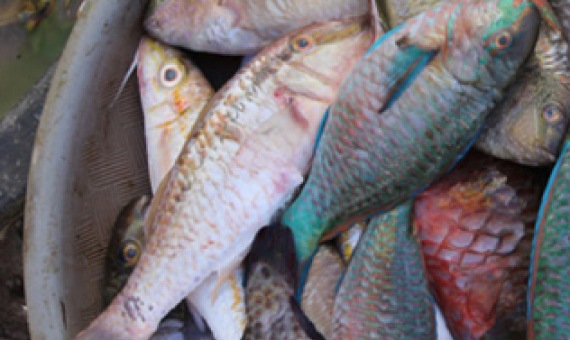
History is written in no small part through the conflicts over shared resources between neighboring countries, as each party tries to maintain its share of the pie. But in the ocean, these issues tend to be exacerbated.
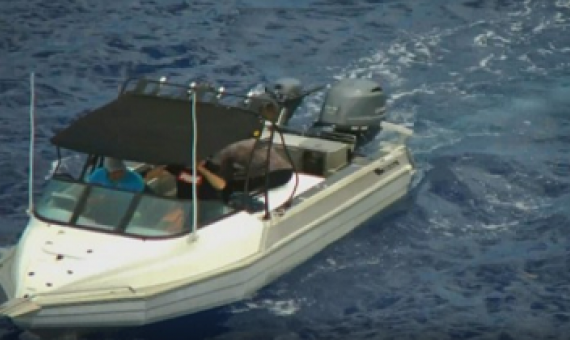
The Pacific island of Niue is trialling drones to catch illegal fishing boats and help with search and rescue.
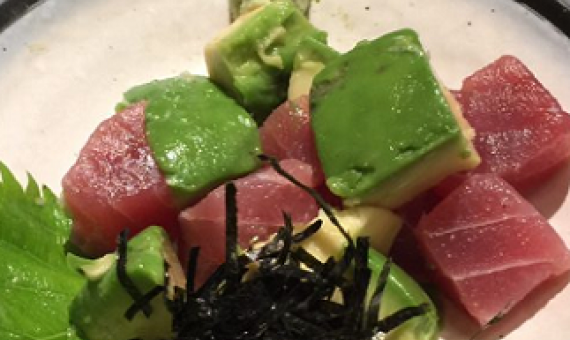
To protect valuable marine resources and to ensure the sustainability of fish stocks, Japan’s Free and Open Indo Pacific Strategy includes a commitment to peace and stability, including assistance to the Pacific in enhancing maritime safety and stability...The government of Japan continues to ass

For years, fisheries managers have struggled to find a delicate balance between competing financial and ecological needs.
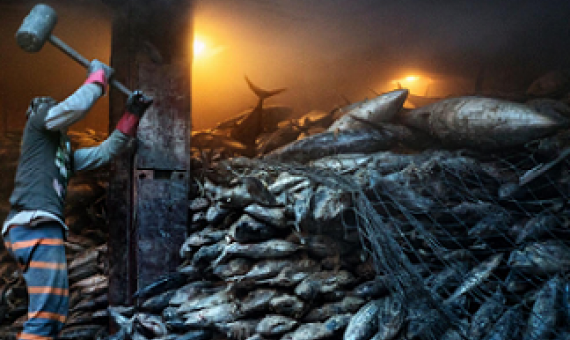
As global fish stocks that feed hundreds of millions of people dwindle, nations are scrambling to finalize by year’s end an international agreement to ban government subsidies that fuel overfishing.
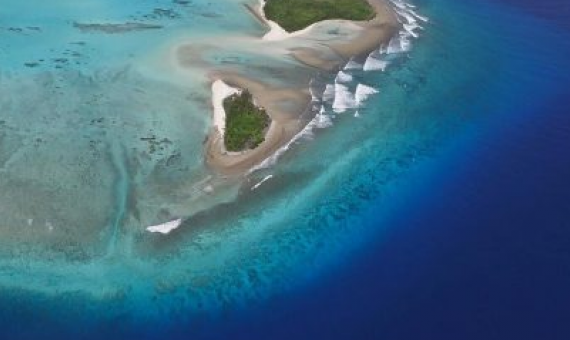
The United States is stepping up its presence in Palau to protect it from a range of threats like illegal, unreported and unregulated fishing (IUU) with the official launch of the coastal surveillance system (CSS). On Oct.
Despite worldwide demand for tuna products and considerable conservation interest by civil society, no single global dataset exists capturing the spatial extent of all catches from fisheries for large pelagic species across all ocean basins. Efforts to spatially quantify the historical catch of global tuna fisheries have been restricted to the few taxa of major economic interest, creating a truncated view of the true extent of the fisheries for tuna and other large pelagic fishes.
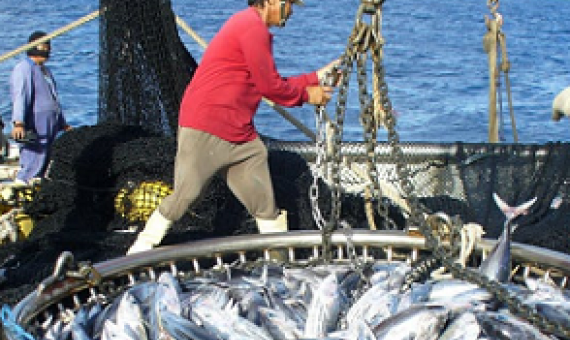
Tropical tuna are one of the few wild animals we still hunt in large numbers, but finding them in the vast Pacific ocean can be tremendously difficult...fishers have long known that tuna are attracted to, and will aggregate around, floating objects such as logs.
![A new study finds that tuna harvests, including of some species considered "vulnerable," have increased by an astonishing 1,000% in the last 60 years — a rate that some scientists warn is unsustainable. [NiCK / Getty Images]](/sites/default/files/styles/news_teaser/public/TUNAoverharvest.png?itok=crdL4iA0)
A new study, published in Fisheries Research, reveals that the sheer amount of tuna being taken from our seas, including some species considered "vulnerable," has increased by an astonishing 1,000% in the last 60 years — a rate that some scientists are saying is unsustainable.