National Geographic said it has launched a five-year Pacific Ocean expedition to investigate marine life and ecosystems, find new species and identify potential protected areas in some of the Earth’s most remote seas. The expedition aboard the ship E/V Argo embarked from Tahiti on Thursday.
Beyond Protection: Recognizing Nature’s Rights to Conserve Sharks
This paper blends conservation science with legal and policy analysis to assess the primary threats to global shark populations and explores innovative approaches to conservation building upon the philosophy of Earth law, including the Rights pf Nature legal framework.Call Number: [EL]Physical Description: 18 p.
Extent and reproduction of coastal species on plastic debris in the North Pacific Subtropical Gyre
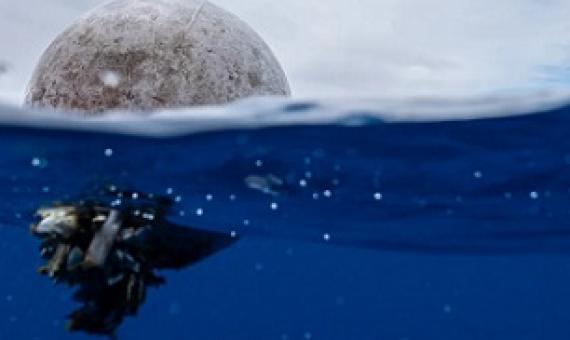
We show that the high seas are colonized by a diverse array of coastal species, which survive and reproduce in the open ocean, contributing strongly to its foating community composition. Analysis of rafting plastic debris in the eastern North Pacifc Subtropical Gyre revealed 37 coastal invertebrate taxa, largely of Western Pacifc origin, exceeding pelagic taxa richness by threefold. Coastal taxa, including diverse taxonomic groups and life history traits, occurred on 70.5% of debris items.
Scientists have found thriving communities of coastal creatures, including tiny crabs and anemones, living thousands of miles from their original home on plastic debris in the Great Pacific Garbage Patch – a 620,000 square mile swirl of trash in the ocean between California an
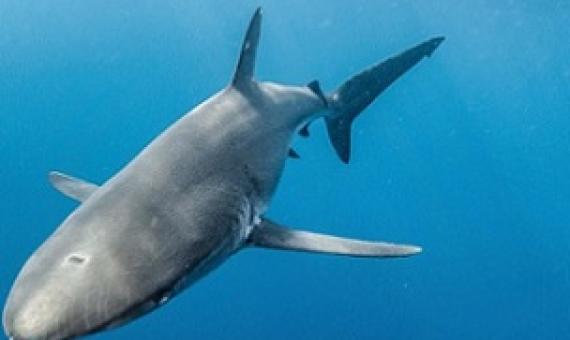
A team of scientists has monitored the movement of 47 silky sharks (Carcharhinus falciformis) tagged with satellite trackers in the Galápagos Marine Reserve off Ecuador.
Synergistic use of UAV surveys, satellite tracking data, and mark‐recapture to estimate abundance of elusive species
Estimating population abundance is central to many ecological studies and important in conservation planning. Yet the elusive nature of many species makes estimating their abundance challenging. Call Number: [EL]Physical Description: 13 p.
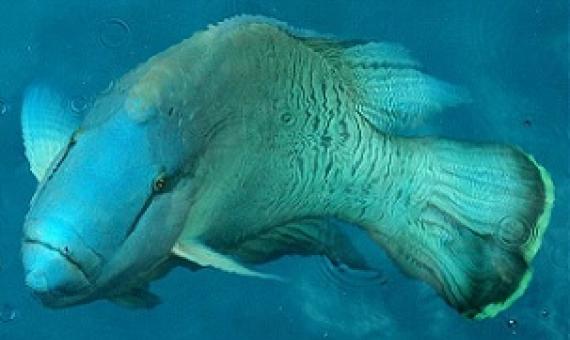
A recent study shows that the Maml population in Palau has declined despite the total ban on the harvesting, possessing, and selling of Maml (Napoleon Wrasse) and Kemedukl (Bumphead Parrotfish).
On land, rivers and mountain ranges can divide species into genetically distinct populations.
On board Guide for the Identification of Sharks and Rays in West Africa listed on International Treaties
This guide has been developed to improve catch and landings data on sharks and rays that are listed on three international treaties, the Convention on the Conservation of Migratory Species of Wild Animals (CMS). This guide intend to assist in the identification of sharks and rays interacting with fisheries operating in the SRFC region. Call Number: [EL]Physical Description: 41 p.
Half a century of rising extinction risk of coral reef sharks and rays
Sharks and rays are key functional components of coral reef ecosystems, yet many populations of a few species exhibit signs of depletion and local extinctions. The question is whether these declines forewarn of a global extinction crisis. We use IUCN Red List to quantify the status, trajectory, and threats to all coral reef sharks and rays worldwide. Here, we show that nearly two-thirds (59%) of the 134 coral-reef associated shark and ray species are threatened with extinction. Alongside marine mammals, sharks and rays are among the most threatened groups found on coral reefs.