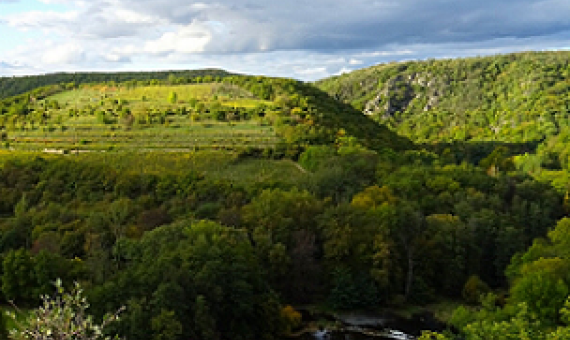
Protecting 30% of the world's land and sea outweigh the costs by a ratio of 5 to 1, according to a new report.
Protecting 30% of the world's land and sea outweigh the costs by a ratio of 5 to 1, according to a new report.
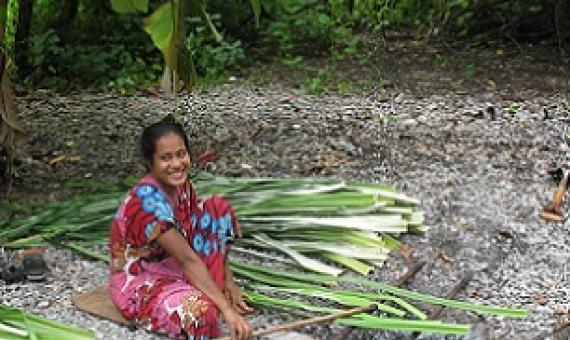
In the accelerated push towards conserving 30% of the Earth's land and water by 2030, asking who, as well as what, is on the map must be at the heart of the conversation.

The Guardian is an experiential environmental educational initiative that was co-developed by Conservation International and partners, including Samoa's Ministry of Education, Science, and Culture (M.E.S.C.) help improve the environmental literacy of communities, targeting Year 7 primary school s
The High Ambition Coalition for Nature and People announced that the Global Environment Facility (GEF) and the World Resources Institute (WRI) will host its new permanent Secretariat.
An international study led by the Institute of Environmental Science and Technology of the Universitat Autònoma de Barcelona (ICTA-UAB) stresses the need to apply a biocultural approach in nature conservation programs.
The Paris climate agreement, signed in December 2015, ranks as one of the most momentous global treaties ever negotiated, setting a crucial goal to seek to limit warming to 1.5–2 °C above pre-industrial levels...Now biodiversity is hoping for its Paris moment.
Le nouveau Cadre du Pacifique insulaire 2021-2025 pour la conservation de la nature et les aires protégées a été approuvé lors de la Conférence et, par la suite, lors de la 30e Conférence du PROE en 2021, par 26 États et territoires Membres. Il rend compte de l’urgence d’une action porteuse de transformations face à l’accélération de nombreuses menaces, aussi bien confirmées qu’émergentes, auxquelles sont confrontées la nature et les populations du PacifiqueCall Number: [EL]Physical Description: 63 p. 29 cm
This new Pacific islands framework for nature conservation and protected areas 2021-2025 was endorsed during the conference and subsequently at the 30th SPREP Meeting by 26 members countries and territories in 2021. It reflects the urgent need for transformative action in response to the multiple accelerating threats, both established and emerging, that are faced by nature and people in the Pacific.Call Number: [EL],333.72099 PACISBN/ISSN: 978-982-04-1007-7,978-982-04-1006-0Physical Description: 61 p. 29 cm.
This session will explore three levels of governance: regional, national and interinstitutional. Through concrete examples at each level, the speakers will describe how governance is organized today in the region at different scales, how enforcement is ensured, and what issues are encountered at every level. Ideally, the outcomes of the session should constitute a good base to build guidelines useful to improve the efficiency to stakeholders in charge of nature conservation and protected areas.Call Number: [EL]Physical Description: 1:04:13
This session will analyze participation in nature conservation in the region through a range of lenses related to good governance (including equity, transparency, and accountability), respect for and incorporation of traditional knowledge, and the extent to which participation can be more effective if people achieve tangible benefits to livelihoods, well-being, and sustainable development.Call Number: [EL]Physical Description: 59:32