About
- Terms of Reference
- Action Plan 2014 – 2020
- PAWG Presentation at Annual Meeting, Suva, Fiji, July 2015
Members
- American Samoa Environmental Protection Agency
- Conservation International (CI)
- Coral Reef Advisory Group (CRAG) – American Samoan Government
- Deutsche Gesellschaft für Internationale Zusammenarbeit (GIZ)
- Marine Areas Network (FLMMA)
- Food and Agriculture Organization (FAO)
- International Union for Conservation of Nature - Oceania Regional Office (IUCN-ORO)
- Protected Areas Learning and Research Collaboration (PALRC)
- The Nature Conservancy (TNC)
- World Wide Fund (WWF)
- Wildlife Conservation Society – Fiji Country Programme
- Wildlife Conservation Society, Melanesia Program
Note - As of November 2022, the PAWG has been rebranded to the Pacific Area-based Conservation Network (PACoN), with a new terms of reference and membership. More information to come - WATCH THIS SPACE...
The Marine Spatial Planning Index: a tool to guide and assess marine spatial planning
Marine spatial planning (MSP) has the potential to balance demands for ocean space with environmental protection and is increasingly considered crucial for achieving global ocean goals.
The Republic of the Marshall Islands - State of Environment Report 2016
This report updates the 1992 State of Environment report with the latest findings from the Marshall Islands. Environmental reporting is defined as a requirement for RMI in the ‘Office of Environmental Planning and Policy Coordination (OEPPC) Act 2003’.
The role of Indigenous peoples and local communities in effective and equitable conservation
Debate about what proportion of the Earth to protect often overshadows the question of how nature should be conserved and by whom.
The status and conservation needs of the Micronesian Megapode (Megapodius laperouse laperouse) across the Mariana archipelago
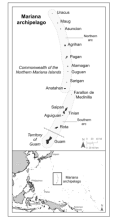
Accurate baseline data for wildlife populations are important to track trends of these
The three screen doors: Can marine “protected” areas be effective?
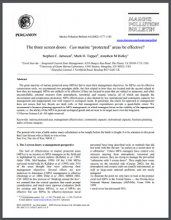
The great majority of marine protected areas (MPAs) fail to meet their management objectives. So MPAs can be effective conservation tools, we recommend two paradigm shifts, the first related to how they are located and the second related to how they are managed.
The ‘Paper Park Index’: Evaluating Marine Protected Area effectiveness through a global study of stakeholder perceptions
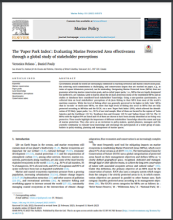
Governments around the world are increasingly committed to reaching terrestrial and marine conservation goals. But achieving such commitments is challenging, and conservation targets that are reached on paper, e.g., in terms of square kilometers protected, can be misleading.
The Pacific Islands Roundtable for Nature Conservation (PIRT)
The Pacific Islands Roundtable for Nature Conservation (PIRT) is a coalition of nature conservation and development organizations, governments, inter-government, donor agencies and community groups created to increase effective conservation action in the Pacific Island Region. It w
Tonga - Rapid Biodiversity Assessment (BIORAP) of the Vava'u Archipelago
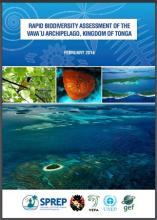
This report presents the results and recommendations of a Biological Rapid Assessment Programme (BIORAP) carried out in the marine and terrestrial environments of the Vava’u Archipelago, Tonga, from 13 to 28 February 2014.
Towards reducing misrepresentation of national achievements in marine protected area targets
Parties to the Convention on Biological Diversity (CBD) adopted 20 targets, known as the Aichi Targets, to benchmark progress towards protecting biodiversity.
Traditional knowledge and the BBNJ instrument
Indigenous Peoples and local communities (IPLCs) are the holders of a vast amount of traditional knowledge of the ocean and its resources.
Turning the Tide for Coral Reefs: the ICRI Plan of Action 2021-2024
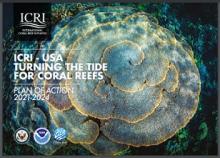
The twin crises of climate change and biodiversity loss have brought into stark relief the need for greater collaboration and action at the international level to conserve, manage, and restore coral reefs.
United Nations List of Protected Areas 2018
The 2018 UN List provides up-to-date information on marine and terrestrial protected areas globally, and identifies those protected areas that have been the subject of management effectiveness evaluations.
Unity of Nature and Man: a new vision and conceptual framework for the Post-2020 Global Biodiversity Framework
People live in nature. However, substantial evidence confirms that, under the pressure of anthropogenic alteration, nature is being fragmented, imperiled and becoming less able to provide essential services.
Use of surrogate species to cost-effectively prioritize conservation actions
Conservation efforts often focus on umbrella species whose distributions overlap with many other flora and fauna.
Valuing nature conservation
Rigorous analysis of opportunities to expand nature conservation can help determine where natural capital could have the biggest impact on climate, jobs, and health.
Vanuatu National Biodiversity Strategy and Action Plan [NBSAP] 2018-2030
Vanuatu signed and ratified the United Nations Convention on Biological Diversity (UNCBD) joining other 190 CBD parties to protect our global biodiversity. Vanuatu’s first National Biodiversity Strategy and Action Plan (NBSAP) was developed and endorsed in November 1999.
Vemööre Declaration : Commitments to nature conservation action in the Pacific Islands region, 2021-2025

“Vemööre” is a term in the Kwenyï language spoken by people from the Isle of Pines in New Caledonia.
Video - An ingenious proposal for scaling up marine protection | The Nature Conservancy
Island and coastal nations need to protect their waters to keep the oceans healthy. But they often have lots of debt and aren't able to prioritize ocean conservation over other needs.
Video - BIOPAMA grantees' voices: MELAD Kiribati
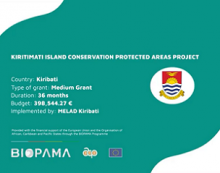
Experiences from the Kiribati Ministry of Environment, Lands and Agricultural Development regarding their medium grant under the EU-ACP BIOPAMA Action Component focusing on management interventions for the Kiritimati Island Conservation Protected Area.
Video - National Protected Areas Forum highlights 2021, Papua New Guinea
The aim of the National Protected Areas Forum was to fulfill mandates and strengthen policies to protect the country’s abundant natural assets into the future to benefit all life and future generations.
Video - Palau: Nest of Life
Palauans describe the environment as "Lukel a Klengar" - the nest of life.
Visitors Count! Guidance for protected areas on the economic analysis of visitation
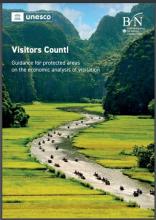
This guidance document aims to build awareness, knowledge, and capacity internationally on how to best undertake economic evaluations of tourism in protected areas, and thereby contribute towards a globally acknowledged standard methodology.
Vuri Clan Forest Conservation Area Management Plan - Choiseul Province, Solomon Islands
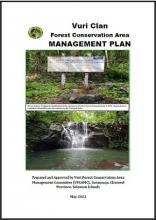
This Management Plan was prepared by the representatives of the Vuri Clan of Sikipozo Tribe in partnership with the Natural Resources Development Foundation (NRDF), Ecological Solutions Solomon Islands (ESSI), World Wide Fund for Nature (WWF-SI), the Ministry of Forestry and Research (National He


What determines the effectiveness of national protected area networks?
More than 15% of global terrestrial area is under some form of protection and there is a growing impetus to increase this coverage to 30% by 2030. But not all protection is effective and the reasons some countries’ protected areas (PAs) are more effective than others’ are poorly understood.
What's on the horizon for community-based conservation? Emerging threats and opportunities
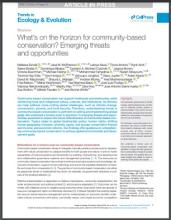
Community-based conservation can support livelihoods and biodiversity, while reinforcing local and Indigenous values, cultures, and institutions. Its delivery can help address cross-cutting global challenges, such as climate change, conservation, poverty, and food security.
Why Human rights matter for marine conservation
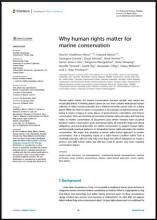
Human rights matter for marine conservation because people and nature are inextricably linked. A thriving planet cannot be one that contains widespread human suffering or stifles human potential; and a thriving humanity cannot exist on a dying planet.
World Bank Global Biodiversity Data

We describe below the data and provide an overview of the specific variables that are constructed for the analysis in the papers: “Revisiting Global Biodiversity: A Spatial Analysis of Species Occurrence Data from the Global Biodiversity Information Facility” by Susmita Dasgupta, Brian
World Commission on Protected Areas (WCPA) Oceania Newsletter No.1, 2020
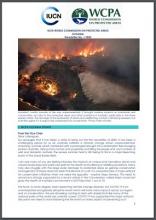
The first edition of the Newsletter of the IUCN World Commission on Protected Areas Oceania (WCPA Oceania) for 2020 is now available.
World Commission on Protected Areas (WCPA) Oceania Newsletter No.2, 2020
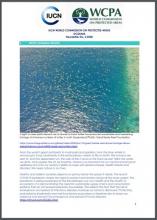
The second edition of the Newsletter of the IUCN World Commission on Protected Areas Oceania (WCPA Oceania) for 2020 is now available.
World Commission on Protected Areas (WCPA) Oceania Newsletter No.3, 2018
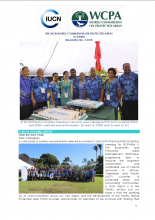
The third edition of the Newsletter of the IUCN World Commission on Protected Areas Oceania (2018). IUCN's World Commission on Protected Areas (WCPA) is the world's premier network of protected area expertise.
World Commission On Protected Areas (WCPA) Oceania Newsletter, No. 4 2019
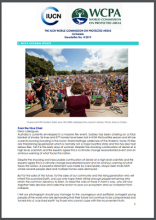
The fourth edition of the Newsletter of the IUCN World Commission on Protected Areas Oceania (2019)
World Database on Protected Areas

The World Database on Protected Areas (WDPA) is the most comprehensive global database of marine and terrestrial protected areas, updated on a monthly basis, and is one of the key global biodiversity data sets being widely used by scientists, businesses, governments, International secretariats an

World Heritage Conservation in the Pacific: The Case of Solomon Islands
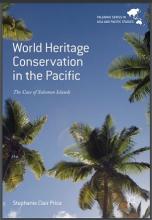
East Rennell (part of the island of Rennell, in Solomon Islands) was inscribed on the World Heritage List in 1998. Its listing was a milestone in the development of the World Heritage Convention regime.

WWF Living Planet Report 2022 - Building a Nature-Positive Society
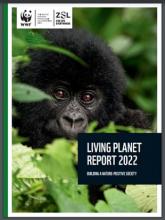
This edition of the Living Planet Report confirms the planet is in the midst of a biodiversity and climate crisis, and that we have a last chance to act. This goes beyond conservation.