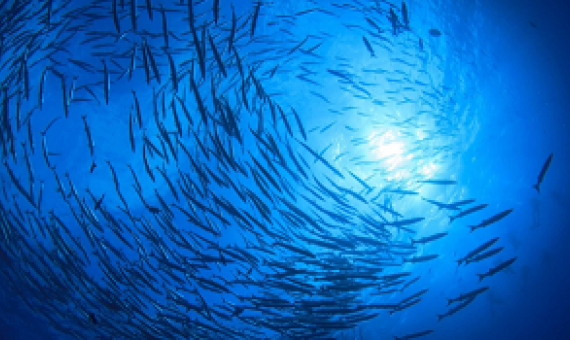
New research finds that, to the contrary, large MPAs can confer benefits on migratory marine species — but only when they are carefully designed, strictly enforced, and integrated with sustainable fisheries management. Click on the link below to read the full article
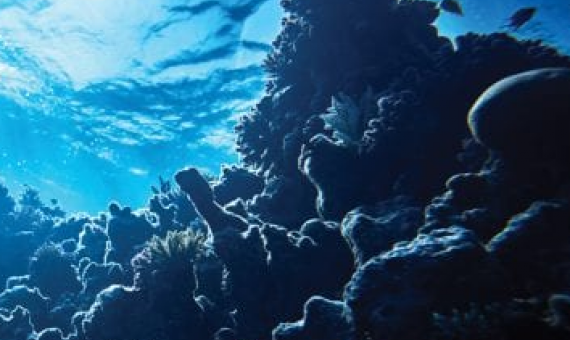
FISHERIES – Effects of marine protected areas on local fisheries: evidence from empirical studies
Marine fisheries throughout the world are in serious decline due to overharvesting (National Research Council, 2001), and management for sustainable fisheries requires effective tactics for limiting exploitation rates. Limitations based on annual stock assessments and total allowable catches calculated from these assessments can be dangerous, and marine protected areas (MPAs) are one tool to limit exploitation rates directly even when total stock size is highly uncertain (Walters, 2000).
The three screen doors: Can marine “protected” areas be effective?
The great majority of marine protected areas (MPAs) fail to meet their management objectives. So MPAs can be effective conservation tools, we recommend two paradigm shifts, the first related to how they are located and the second related to how they are managed. MPAs are unlikely to be effective if they are located in areas that are subject to numerous, and often uncontrollable, external stressors from atmospheric, terrestrial, and oceanic sources, all of which can degrade the environment and compromise protection.
Nations have just one more year to reach the global marine conservation goal to protect 10 percent of the world’s oceans by 2020. Although 7 percent is already legally protected, many new declarations are massive, offshore areas.
Temperature rise and climate change affect not just some countries but the entire globe, on which all species live- humans, animals, plants, fish, microbes. Click on the link below to read the full article.
We have reached the point in human history where we can impact every inch of the ocean and at every depth. In the next decade, we need to ramp up the area of ocean we protect, but we must also address sustainable fishing and environmental justice in the places where we allow fishing.
An area of the South Island coast and ocean the size of Auckland is being tagged for marine protection under a proposal supported by two MPs. Click on the link to read the full article.
A Cook Islands marine conservationist who received a global environmental award says she hopes it will bring more attention to protecting the Pacific Ocean. Click on the link below to read the full article.
In an announcement last week, Jonathan Wilkinson, Canada’s minister of fisheries, oceans, and the Canadian Coast Guard, laid out new rules banning oil and gas development, trawl fishing, mining, and dumping in Canada’s marine protected areas (MPAs).
Climate Change, Coral Loss, and the Curious Case of the Parrotfish Paradigm: Why Don’t Marine Protected Areas Improve Reef Resilience?
Scientists have advocated for local interventions, such as creating marine protected areas and implementing fishery restrictions, as ways to mitigate local stressors to limit the effects of climate change on reef-building corals. However, in a literature review, we find little empirical support for the notion of managed resilience. We outline some reasons for why marine protected areas and the protection of herbivorous fish (especially parrotfish) have had little effect on coral resilience.